
Landscape Drainage in Kenya: What to Check After Heavy Rain
Water pooling in your garden, driveway or compound after heavy rain? Learn what to check and what to share before a landscape site assessment in Kenya.
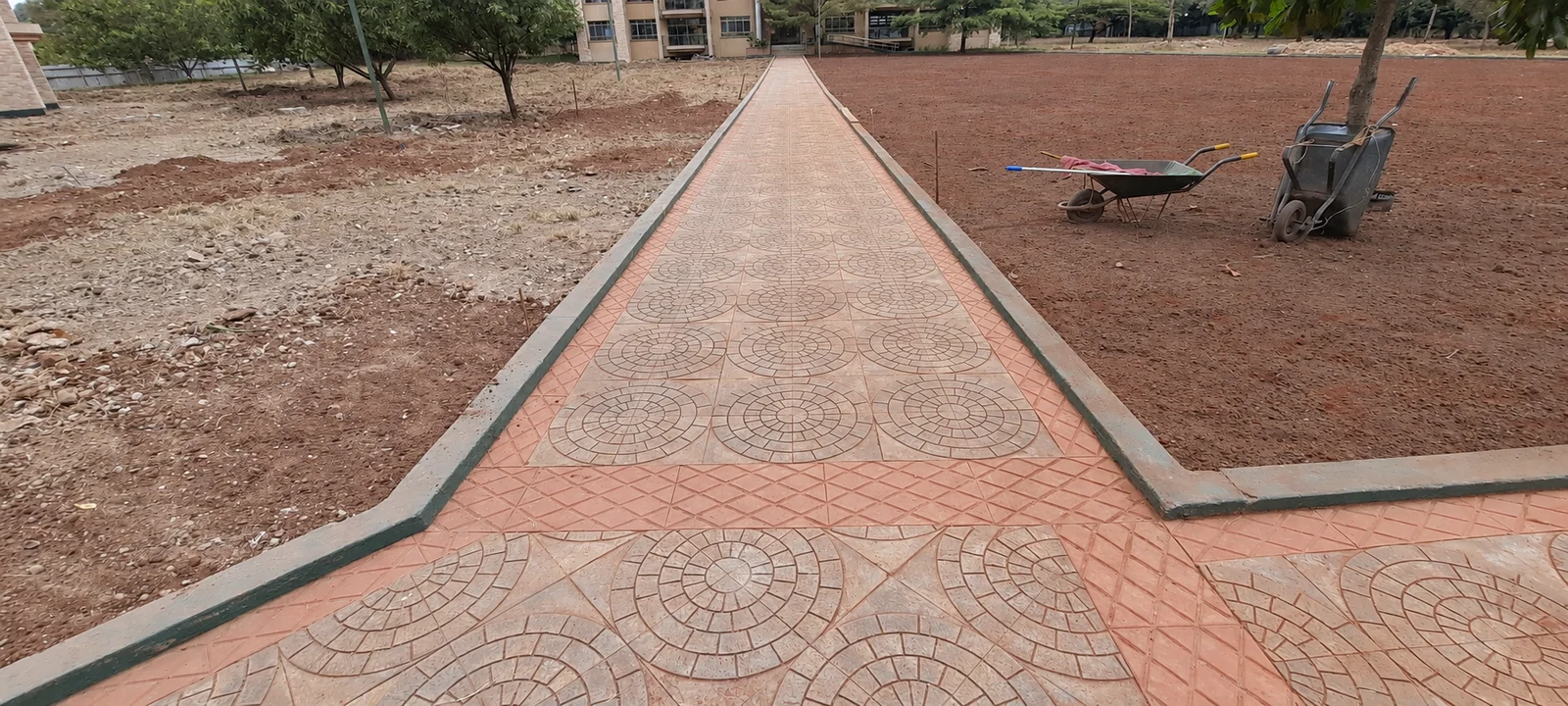
After heavy rain, walk your property once it’s safe. Look at the driveway, lawn edges, entrances and planting beds. Note where water first appears, which way it moves and where it remains once the rain stops. A few photos taken from the same spot can help you show what changes as the site dries.
Follow the water back to its source. A wet patch beside a building may be receiving water from a roof downpipe, paved area or higher ground. Look for visible debris at grates and channel entrances. If water reaches a doorway, crosses a pedestrian route or repeatedly pools at the same wall, mark the location for assessment.
Look at the edges as well as the low spots. A raised kerb can trap water on one side of a path. A downpipe may empty into a planting bed that already receives runoff from paving. On a sloping site, look for soil washed downhill and deposits where the slope flattens. The same checks apply to a home garden, a school compound or a hotel entrance across Kenya. The ground levels, soil and existing drainage guide what to do next.
Check where the water can go. Before adding a drain or lifting a lawn, check the ground levels and identify where runoff can safely discharge. On a managed property, note where standing water interrupts access to parking bays, ramps and service yards. If you’re preparing a new lawn, review the relationship between the proposed ground levels, paved edges and drainage alignment before the turf goes down.
Send us what you observed. Share your town or county, two or three photos or a short video, and how long the water stays after the rain. If you have a site plan, include it. Botanique Designers can assess the levels, surfaces and planting before advising on the work to scope.
Written by Widson Omutelema Ambaisi — Founder & Principal Landscape Designer, Botanique Designers