
Why Is My Sprinkler System Watering Unevenly? A Kenya Garden Checklist
Dry patches beside soaked lawn? Learn what uneven sprinkler coverage can mean, what to check safely and what to share before an irrigation assessment in Kenya.
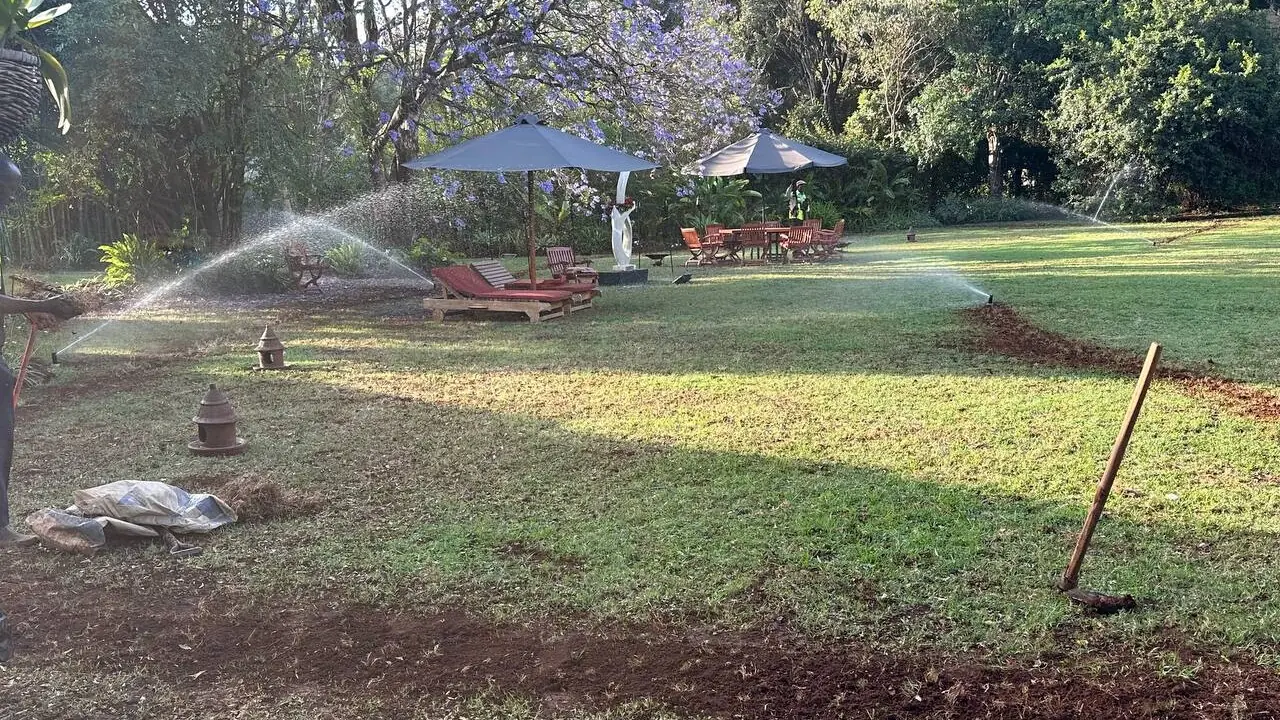
A sprinkler system can be running every day while parts of the garden remain dry. One section of lawn may turn brown as another becomes waterlogged. Some sprinkler heads may spray strongly, while others barely rise above the grass.
Increasing the watering time can waste water, create puddles in the areas already receiving enough and leave the underlying fault unresolved. Start by identifying the pattern. Does the problem affect one sprinkler, one irrigation zone or the entire property?
If only one sprinkler is affected
A single weak or irregular sprinkler often points to a local problem. The head may be blocked by soil, grass or debris. Its spray direction may have shifted, the nozzle may be damaged or a nearby plant may be obstructing the water.
Run the affected zone briefly and observe the sprinkler from a safe distance. Check whether it rises fully, whether the spray is even and whether water reaches the intended planting or lawn area. Look for overspray on walls, driveways and footpaths.
Avoid dismantling pressurised components while the system is running. If cleaning or realignment fails to restore normal coverage, the nozzle or sprinkler head may require replacement.
If several sprinklers in one zone are weak
When multiple sprinklers in one zone have poor coverage, check for a pressure or flow problem. Possible causes include a partly closed valve, a blocked filter, a leak, an undersized supply line or demand that exceeds available flow. Where the system uses a pump or storage tank, pump performance and the available water level also matter.
Kenya’s Irrigation Regulations of 2021 identify pressure, filtration, flow and pump performance among irrigation maintenance checks.
A sudden change can point to a blockage, leak, valve fault or deteriorating pump. Persistent unevenness from the beginning may point to the original design or installation.
Look for signs of a hidden leak
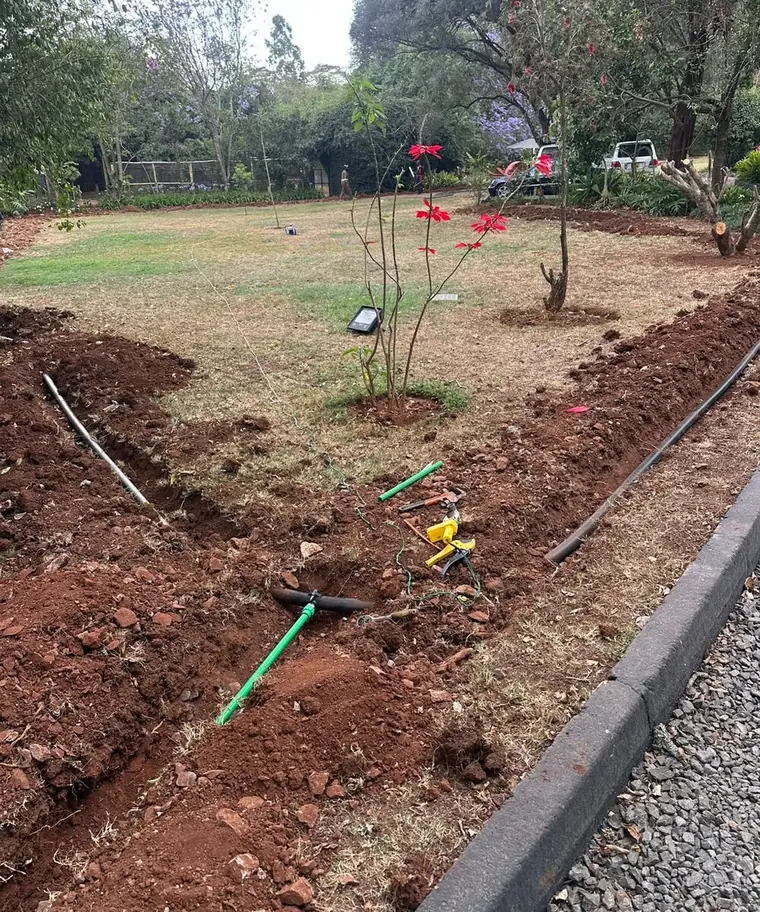
An underground leak can appear as an unusually wet strip, soft ground, local erosion or a sprinkler head that barely rises. Compare the affected zone with others.
- Does it take longer to reach normal pressure?
- Are several heads dribbling?
- Is water collecting between the valve and the weak sprinklers?
- Has the pump begun running differently?
- Is there unexplained water loss from the storage tank?
Investigate persistent wet ground before increasing the watering duration. More runtime can increase water loss and worsen soil erosion or waterlogging. If wet patches persist after rainfall with the irrigation off, also check where rainwater collects and drains.
The irrigation layout may not provide even coverage
Sprinklers need suitable spacing, matched output and correct positioning. If the heads are too far apart, use incompatible nozzles or are installed without regard to wind and boundaries, dry gaps can remain between spray areas.
This often produces a repeating pattern of green grass close to each sprinkler and dry grass between them. Running the zone longer may soak the green sections while the gaps stay dry.
An assessment should examine both the equipment and the zone layout. Botanique’s Irrigation Systems service includes water-source assessment and zone planning for drip, sprinkler and micro-irrigation systems.
Check the controller and current weather
A controller can create uneven results if zones have unsuitable runtimes, start times or frequencies. A recently repaired zone might have been left off, or a seasonal programme may no longer match current conditions.
Kenya’s Irrigation Regulations direct scheme managers to account for soil type, drainage and prevailing climate when scheduling irrigation. These factors also help when setting up a garden controller.
Kenya Met’s 17–23 November 2026 forecast anticipates continued rain in parts of several counties. A garden in Nairobi, Nanyuki, Kisumu, Nakuru or the Coast can need a different schedule even with similar equipment. After substantial rain, check the soil and plants before resuming the normal programme.
The system may be even, but the soil is not
Sometimes sprinklers distribute water reasonably well while the garden still develops wet and dry areas. Compacted soil can accept water slowly and encourage runoff. Sandy areas may drain rapidly. A slope can move water away from the upper lawn and concentrate it lower down. Thatch, construction debris, shallow soil and poorly prepared planting beds can create further differences.
Depending on the cause, the site may need soil improvement, shorter watering cycles, drainage correction, grading or a different irrigation method for particular planting areas.
What you can record before requesting an assessment
A short, controlled test can make the initial diagnosis more efficient. Record the following.
- The affected zone and whether it serves lawn, planting beds or both.
- Sprinklers that fail to rise, mist, dribble or spray outside their intended area.
- Persistent dry patches and unusually wet ground.
- The water source, such as mains supply, a borehole or a storage tank, and whether a pump is used.
- When the problem began and any recent excavation, construction, mowing or irrigation repair.
- A short video of the affected zone operating.
Commercial properties should also retain the controller programme, zone map, recent repair history and any available pressure or flow readings. These records help distinguish a maintenance problem from a system that needs redesign or expansion. See Garden Maintenance for ongoing care.
Does the system need repair or redesign?
A repair is usually appropriate when an otherwise suitable system has a limited fault such as a blocked nozzle, damaged head, leaking connection or defective valve.
A redesign or retrofit may be more appropriate in these situations.
- Dry areas have existed since installation.
- The garden layout has changed, mature plants obstruct the spray or lawn has been replaced with beds.
- Areas with different watering needs share one zone.
- The water source or pump has changed.
- The installed spacing leaves gaps in coverage.
Repeatedly replacing individual heads will leave inadequate pipe sizing, poor zoning or unsuitable sprinkler placement unresolved.
Request an irrigation assessment
If your lawn has dry patches, soaked sections or sprinklers that operate inconsistently, share the property location, a brief description of the affected area and a short video of the system running if available.
Botanique Designers can assess the water source, zones, pressure and flow symptoms, sprinkler arrangement and surrounding landscape conditions before recommending repair, adjustment or redesign.
Written by Widson Omutelema Ambaisi — Founder & Principal Landscape Designer, Botanique Designers